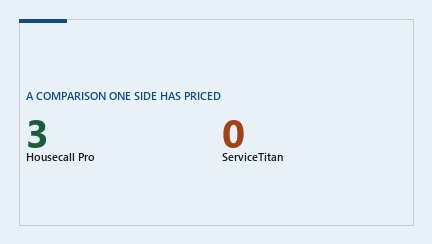
Most of page one for these searches is vendors comparing themselves to competitors. That content is not worthless, but it has to be read a particular way.
What the market actually looks like
Search for a comparison of the major field service platforms and the results are largely pages published by field service platforms: a vendor comparing itself to a competitor, a vendor’s academy listing alternatives to a competitor, a third vendor reviewing the first two.
The independent comparison content is a small minority. That is the structural fact this site was built on, and it is verifiable in ten minutes with a browser.
Reading it usefully anyway
Vendor comparisons are excellent for one thing: finding out what a vendor thinks its own weakness is. The competitor strengths a vendor concedes are the ones it could not credibly deny. Read the concessions, discount the conclusions.
They are also reliable on their own published facts — their own pricing, their own feature list. A vendor rarely misstates its own price.
They are least reliable on the competitor’s pricing, the competitor’s feature availability by tier, and anything phrased as what customers “report” or “find”.
The independent ones are not automatically better
A page with no product to sell can still be wrong, and often is, because it is copying other pages.
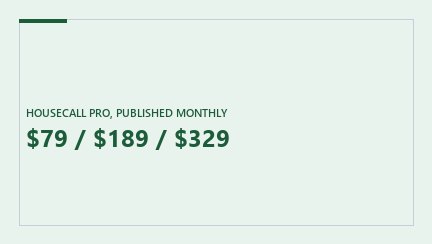
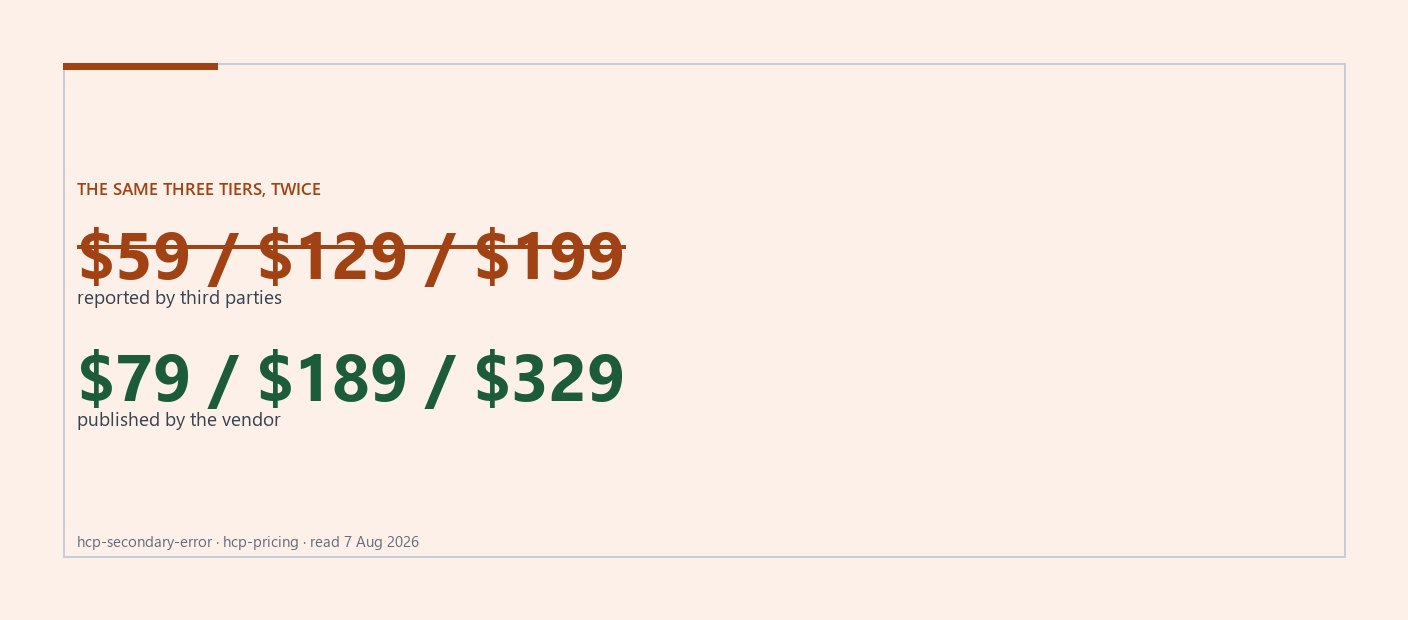
The worked example from this site’s own research: a widely-repeated third-party figure gave Housecall Pro as USD 59, USD 129 and USD 199 per user per month. The vendor’s page publishes USD 79, USD 189 and USD 329 monthly and USD 59, USD 149 and USD 299 annually, and never uses “per user”. The secondary had confused annual with monthly, invented a pricing unit, and got two tiers wrong.
The test that catches all of this is the same one every time: does the page tell you where the number came from and when it was read? If not, it is a rumour with a table around it. Apply that test to this page too.
Sources
- Workyard — secondary unverified, read
- search-result aggregation of third-party comparison pages (no retrievable URL recorded) — secondary unverified, read
Vendor pricing changes without notice. Every figure above carries the date it was read. If a vendor’s current page disagrees with this one, the vendor’s page is right and this one is stale — and that is a bug worth reporting.