Three vendors, three different units, and comparing the headline numbers directly gets you the wrong answer.
The units are not the same
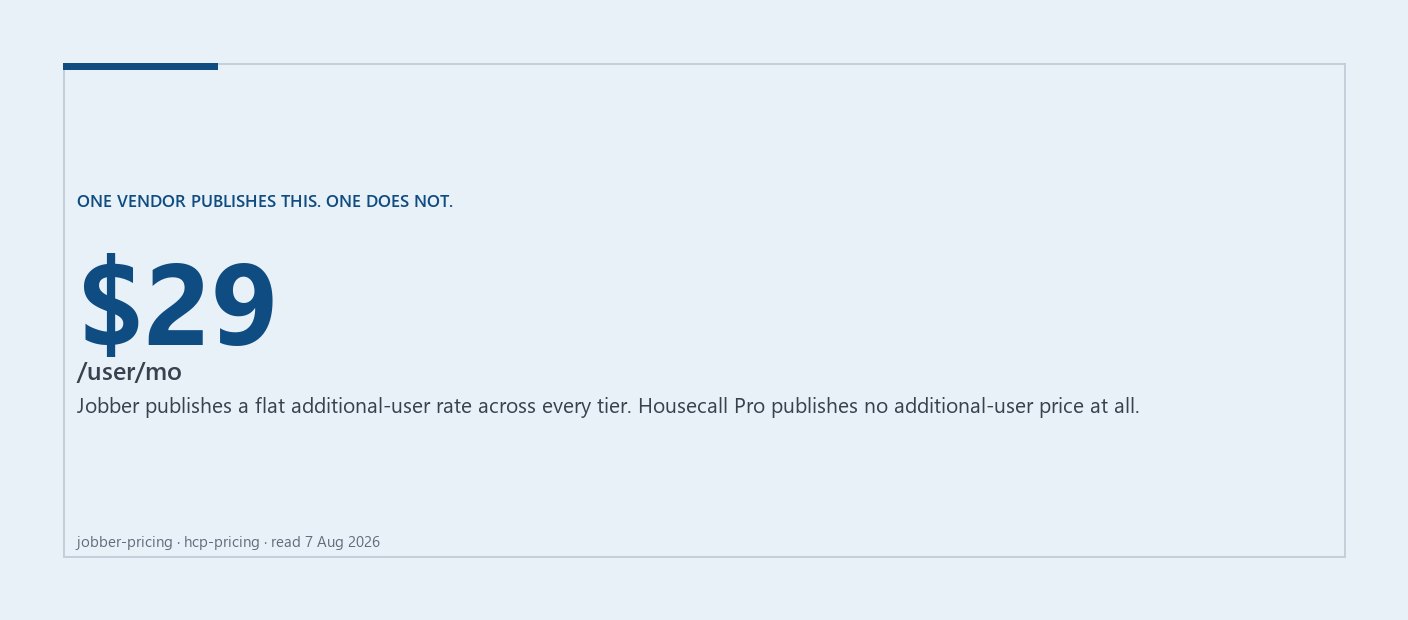
Jobber prices per user: tiers include a stated number of users and additional users cost USD 29 per month each. Everyone who logs in is a user — technicians, dispatchers, office staff, the owner.
ServiceTitan states its model is per-technician. That is a different unit. If office staff are not counted, a shop with 12 technicians and 5 office seats is billed on 12, not 17.
Housecall Pro publishes tier prices and does not publish a unit at all — no included seat count, no additional-user rate. We read the page; the numbers are not there.
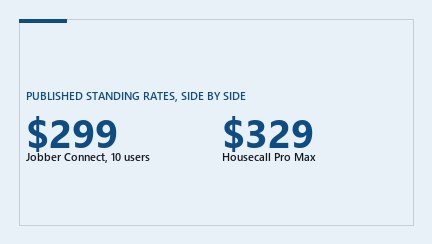
Comparing USD 189 against USD 139 against an unpublished per-technician rate is therefore comparing three different things, and any table that lines them up in one column is misleading you by construction.
Where it bites: the office
Trade shops in this band run roughly one office seat per three to five technicians. Under per-user pricing those seats are billable. Under per-technician pricing they may not be.
For a 20-technician shop with 5 office seats, per-user pricing bills 25 and per-technician pricing bills 20. At USD 29 per additional user that difference alone is USD 145 a month, USD 5,220 over three years, before anything else moves. That is the marginal cost of five seats at a published rate; it is not a total, and at 25 users no total can be computed, because Jobber’s published grid stops at fifteen and directs larger shops to sales.
It also cuts the other way. Per-technician pricing at a high per-head rate can cost far more than per-user pricing at a low one. The unit tells you the shape of the bill, not its size.
Questions that produce a comparable number
Ask every vendor the same five, and insist on the answers in writing:
1. What exactly counts as a billable seat — does a read-only office login count? Does a subcontractor? Does a seasonal tech who works four months?
2. What is the included count on the tier you are quoting?
3. What does seat number N+1 cost, at my N?
4. Can seats be removed mid-term, and does the bill go down?
5. What is the renewal rate after the first term?
Question 5 is the one that gets skipped and the one that costs the most.
Sources
- Jobber — primary vendor pricing page, read
- Housecall Pro — primary vendor pricing page, read
- ServiceTitan — quote gated confirmed, read
Vendor pricing changes without notice. Every figure above carries the date it was read. If a vendor’s current page disagrees with this one, the vendor’s page is right and this one is stale — and that is a bug worth reporting.