Collecting on site is the single biggest cash-flow change this software makes. It is also where the fees live.
The cash-flow case
The strongest argument for field service software in a trade shop is not scheduling. It is that the invoice leaves with the technician and the payment arrives the same day, instead of an invoice being typed on Friday and paid in six weeks.
That change is worth real money in working capital, and it is the benefit most likely to survive contact with a shop that hates software.
And the fees that come with it
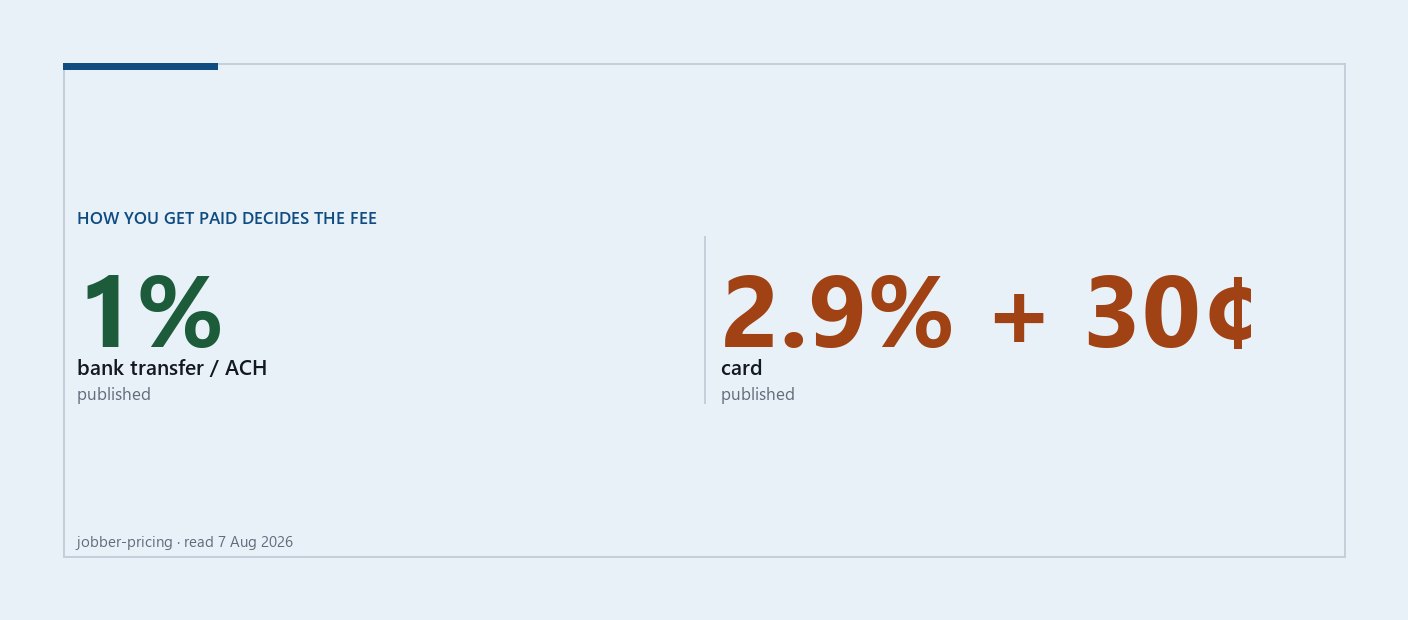
Same-day collection mostly means card collection, and card collection carries the published processing rates: Jobber 2.9% plus 30 cents, 1% ACH, 2.7% plus 30 cents Tap to Pay; Housecall Pro card “as low as 2.59%”, bank payments 1%.
At USD 100,000 a month of card volume the difference between 2.9% and 2.59% is roughly USD 310 a month. At the same volume, moving a fifth of it to ACH at 1% saves around USD 380 a month.
So the invoicing workflow and the processing rate are one decision, not two, and evaluating either alone gets the wrong answer.
What to check before you commit
Does the invoice reach the customer in a form they pay without calling the office? That is the whole test, and it is answerable in a trial with real customers.
Does a deposit or progress payment work for installation jobs, or is it built for one visit one invoice?
Does the accounting export land in your bookkeeper’s system without manual repair? Ask your bookkeeper, not the vendor.
Sources
- Jobber — primary vendor pricing page, read
- Housecall Pro — primary vendor pricing page, read
Vendor pricing changes without notice. Every figure above carries the date it was read. If a vendor’s current page disagrees with this one, the vendor’s page is right and this one is stale — and that is a bug worth reporting.