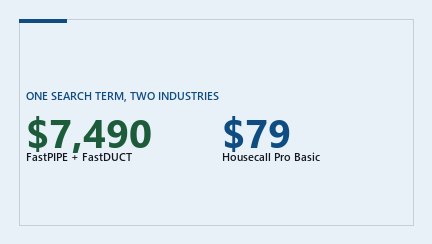
One vendor publishes what an extra technician costs but not what the plan costs. Another publishes what the plan costs but not how many technicians it includes. Neither can be totalled from its own page.
The short answer
Dispatch software is a field service platform sold under the name of its most visible module. There is rarely a separate product: the dispatch board, the schedule and the technician’s app are one system, and buying “dispatch software” means buying the platform around it.
What is genuinely different between vendors is not whether they have a board. They all have a board. It is whether a dispatcher can work it under pressure, whether the technician sees the change, and — the part nobody advertises — whether you can find out what it costs.
What each vendor publishes, and what it withholds
| Vendor | Base price published? | Per-seat price published? |
|---|---|---|
| Workiz | No — “Request pricing” on Standard, Pro and Ultimate | Yes — $55 a month on Standard, $65 on Pro, annual payment. Ultimate not published |
| Housecall Pro | Yes — $79 / $189 / $329 monthly, or $59 / $149 / $299 annually | No — neither the included seat count nor the additional-user rate |
| Jobber | Yes — a grid at 1, 5, 10 and 15 users | Yes — $29 a month each. Above 15 users the page says contact sales |
| ServiceTitan | No — three named tiers, no figure | No |
Jobber is the only vendor of the four from whose own page a ten-technician shop can produce a total. That is worth weighing as a fact about the vendor, not only as a convenience.
A shop of eight technicians can price Jobber exactly. It cannot price Workiz at all, because the base is missing. It cannot price Housecall Pro either, because the seats are missing. And it cannot price ServiceTitan because nothing is published.
Why so much of this market prices by conversation rather than by page is set out in why ServiceTitan does not publish a price. What the published half is worth once you do have both is in per-seat, per-technician, per-user.
The figures circulating for the vendor that publishes none
Third-party comparison pages carry specific numbers for Workiz. This site does not print them as Workiz’s price, and here is precisely why.
Read on 9 August 2026, third-party pages reported a tier called Kickstart at $187 a month, Standard at $229 and Pro at $270, with additional users at $46 to $54. Two things are wrong with using that.
- The vendor’s current page names three tiers — Standard, Pro and Ultimate — and shows no Kickstart at all. A source describing a tier the vendor does not currently list is describing a different moment, and nothing on it says which.
- The additional-user range disagrees with the vendor. Workiz publishes $55 and $65; the secondary range tops out at $54. On the one figure that can be checked against the vendor, the secondary sources are wrong.
What actually separates one dispatch board from another
Every vendor page lists the same capabilities. The differences that matter are behavioural, and three of them can be tested on a trial rather than taken on trust.
- What a same-day emergency costs the dispatcher. A furnace out in January arrives at 8:40am and something has to move. The question is how many actions it takes to reassign, and whether the displaced customer is notified automatically or by someone remembering.
- Whether the technician sees the change. A board that updates in the office and not on the phone is worse than a whiteboard, because the whiteboard never claimed to have told anyone.
- What happens when a job overruns. Most days include one. Whether the board shows the knock-on down the rest of the route, or just leaves the next slot looking fine, is the difference between a tool and a display.
The dispatcher’s workflow in full is in dispatch and scheduling, and whether technicians will use what you buy — which decides more outcomes than any feature — is in the mobile app. Dispatch is not the same purchase as HVAC estimating or HVAC accounting, and a platform strong at one is not automatically strong at the others.
Pricing a shortlist you cannot price
If two of your four candidates publish no base price, the shortlist has to be costed in a sales call. Three things make that call produce a number instead of a brochure.
- Give the crew size first and ask for the total, not the tier. “Eight technicians, two office, one owner — what is the monthly total?” is a harder question to answer with a tier name.
- Ask what the same total is in year two. Introductory rates are common and their expiry is where a published price stops being the price.
- Ask for it in writing before the demo. A vendor that will not put a number in an email before showing you the product is telling you something about how the number is set.
The full list of questions that produce written answers is in the demo call.
What the results page looked like, and what this page cannot tell you
Read on 9 August 2026, the US results page for hvac dispatch software returned five results: two software vendors, an Intuit reseller, an equipment manufacturer’s blog, and a commercial listicle served from a University of California subdomain. No independent buyer-side publisher.
- What Workiz, ServiceTitan or Housecall Pro cost for a real crew. Each is missing a different half of the sum, and this page prints neither half from a secondary source.
- How any board behaves under pressure. This site has not operated the software and does not claim to have. The three tests above are for your trial, not reports from ours.
- Whether the secondary figures for Workiz were ever right. They may describe an older price list. Nothing on those pages says, and that is the problem with them.
Sources
- Workiz — quote gated confirmed, read
- third-party comparison and review pages (aggregate) (no retrievable URL recorded) — secondary unverified, read
- Housecall Pro — primary vendor pricing page, read
- Jobber — primary vendor pricing page, read
- ServiceTitan — quote gated confirmed, read
- Google US, read first-hand — observed serp, read
Vendor pricing changes without notice. Every figure above carries the date it was read. If a vendor’s current page disagrees with this one, the vendor’s page is right and this one is stale — and that is a bug worth reporting.