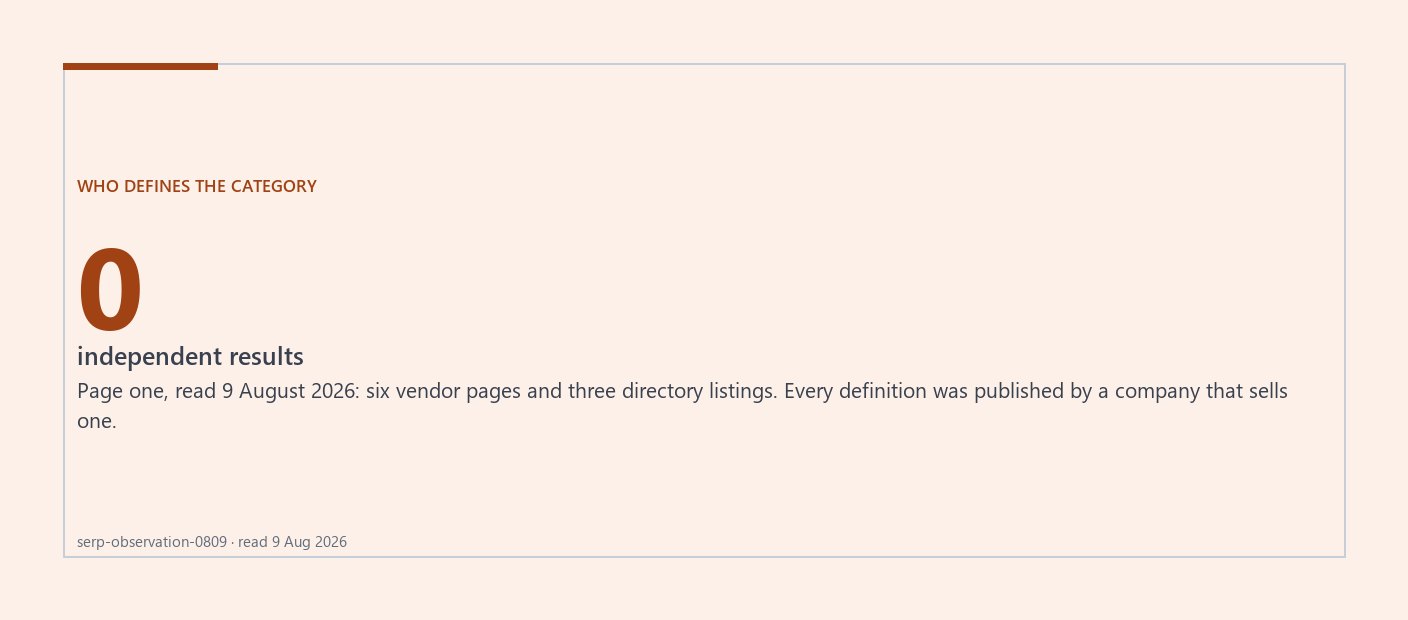
The definition is not complicated. What is worth knowing first is that on the results page you just came from, every explanation of the category was published by a company that sells one.
The short answer
Field service management software is the system of record for work that happens at a customer’s address. It holds the customer and their equipment history, puts jobs on a schedule, gets them to a technician’s phone, produces a quote and an invoice, and takes the payment.
One vendor’s glossary puts it as “the coordination and management of a company’s resources and personnel working outside the office”, and lists scheduling and dispatching, tracking field personnel, managing customer interactions and service delivery coordination as the core. That is a serviceable definition and this page does not improve on it.
What it actually does, in the order a job moves
The category is easier to hold as a sequence than as a feature list, because that is the order the work happens in.
- The call. A customer record with address, equipment and history, so whoever answers is not starting from nothing.
- The schedule. A job placed in a slot, against a technician with the right skills and a route that makes sense.
- The dispatch. The job reaching the technician’s phone with everything needed on it, and the technician’s status coming back.
- The work. Notes, photographs, parts used, time on site — captured once, on site, rather than reconstructed in an office that evening.
- The price. A quote produced at the door from a price book, or an invoice from what was done.
- The money. Payment taken on the spot or sent, and the whole record pushed into whatever holds your books.
A platform that does all six is the category. A tool that does one or two of them is a good tool with a different name — invoicing apps, scheduling apps and pricebook products all rank for these searches and none of them is field service management software.
What it costs, from the vendors that publish a figure
This is the section a vendor definition page does not have. Every figure was read from the vendor’s own page on the date shown in the sources.
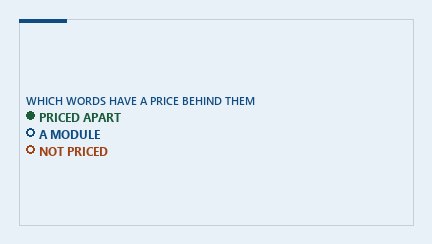
| Vendor | Published entry price | What is not published |
|---|---|---|
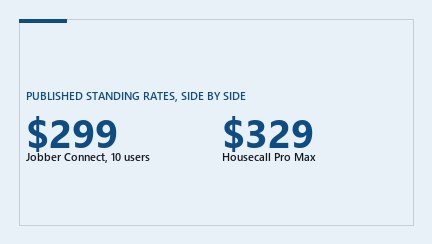
| Jobber Core | $49 a month, 1 user, no commitment | Nothing material. The grid runs to 15 users and additional users are $29 a month |
| Housecall Pro Basic | $79 a month, or $59 billed annually | How many users a tier includes, and what an additional user costs |
| Workiz | Not published | Every base tier price. Extra members are published at $55 and $65 a month |
| ServiceTitan | Not published | Any figure at all, against three named tiers |
| FieldPulse | Not published | Any figure. The page states the model is seat-based and asks for a conversation |
A category where three of five vendors publish no entry price is not unusual and it is not an accident. What it means for a buyer is that a shortlist cannot be costed from vendor pages alone, and the first honest number arrives in a sales call.
Why the largest vendor in the category publishes nothing is worth understanding rather than resenting — it is set out in why ServiceTitan does not publish a price. What the published figures add up to over three years is in what field service software actually costs.
Whether you need one
Four conditions. Meeting one is not enough; meeting three usually is.
- More than one person is dispatched. A single-truck owner-operator with a phone and a notebook is not obviously worse off, and the software will not pay for itself on scheduling alone.
- The same information is entered twice. Once on a paper ticket and again into accounting is the classic case, and it is the one that produces a measurable saving.
- Money is arriving late because invoices leave late. This is the strongest single argument for the category, and the one most easily checked against your own ageing report.
- You cannot answer what a customer’s equipment history is without a filing cabinet. Recurring service and maintenance agreements make this decisive.
If none of those are true, the honest answer is that you do not need this software yet. That answer does not appear on vendor pages, which is the whole reason this one exists. The shape of the decision at a small crew size is in field service software for a 5-technician shop, and where the published pricing grids stop being useful is in ten to thirty technicians.
The terms you will meet next
The category is dense with abbreviations, and vendors use them inconsistently.
FSM is simply the abbreviation of this category. Dispatch software usually means one module of it sold under its own name. Field service automation is a claim about how much of the sequence above runs without a person. Each of those is a separate search with its own results page, and each is covered here: the FSM vocabulary, HVAC dispatch software and field service automation.
If you already know the category and want the buying comparison rather than the definition, start at Jobber against Housecall Pro, which is the comparison both sides have priced.
What this page cannot tell you
- Which product is best. No page can, including the ones that claim to. What a shortlist should be sorted on depends on your job mix, and the sorting question is handled per shop type rather than universally here.
- What three of the five vendors above cost. They do not publish it, and this site does not print a price it could not read at source.
- How any of it behaves in use. This site has not operated, deployed or trialled any of the software it compares.
The one honest way to find out how a platform behaves on your work is a trial run on a real job, and running one properly is set out in running a real 14-day trial.
Sources
- IFS — primary vendor page, read
- Google US, read first-hand — observed serp, read
- Housecall Pro — primary vendor pricing page, read
- Jobber — primary vendor pricing page, read
- ServiceTitan — quote gated confirmed, read
- Workiz — quote gated confirmed, read
Vendor pricing changes without notice. Every figure above carries the date it was read. If a vendor’s current page disagrees with this one, the vendor’s page is right and this one is stale — and that is a bug worth reporting.